

A renovation can transform a home. A sound purchase decision also requires understanding what cannot be seen during a first viewing.
First impressions do not tell the whole story
A flawless kitchen, carefully designed lighting and a refined palette of materials can make a viewing feel immediately convincing. Yet “newly renovated” describes an appearance or a recent intervention; on its own, it does not guarantee the quality of the work, its true scope or the documentation behind it.
For an international buyer, this distinction matters. When a property appears ready to move into, it is easy to accelerate the decision and assume that every essential element has been renewed. In reality, a renovation may be limited to visible finishes or may involve a comprehensive intervention. The difference affects price, future maintenance and peace of mind.
The right question is not only “Do I like it?” It is also: “What exactly was renovated, how can it be evidenced and what may still require attention?”
Renovated, updated or simply restyled
Property listings often use words such as “renovated”, “refurbished” or “brand new” with considerable flexibility. A home may have received fresh paint, furniture and new finishes while older installations remain in place. Another may have undergone a new layout and substantial technical work. During a short viewing, both can look equally appealing.
The value of a renovation should therefore not be judged only by its date, style or stated cost. Its scope, consistency, traceability and performance in everyday use matter just as much.
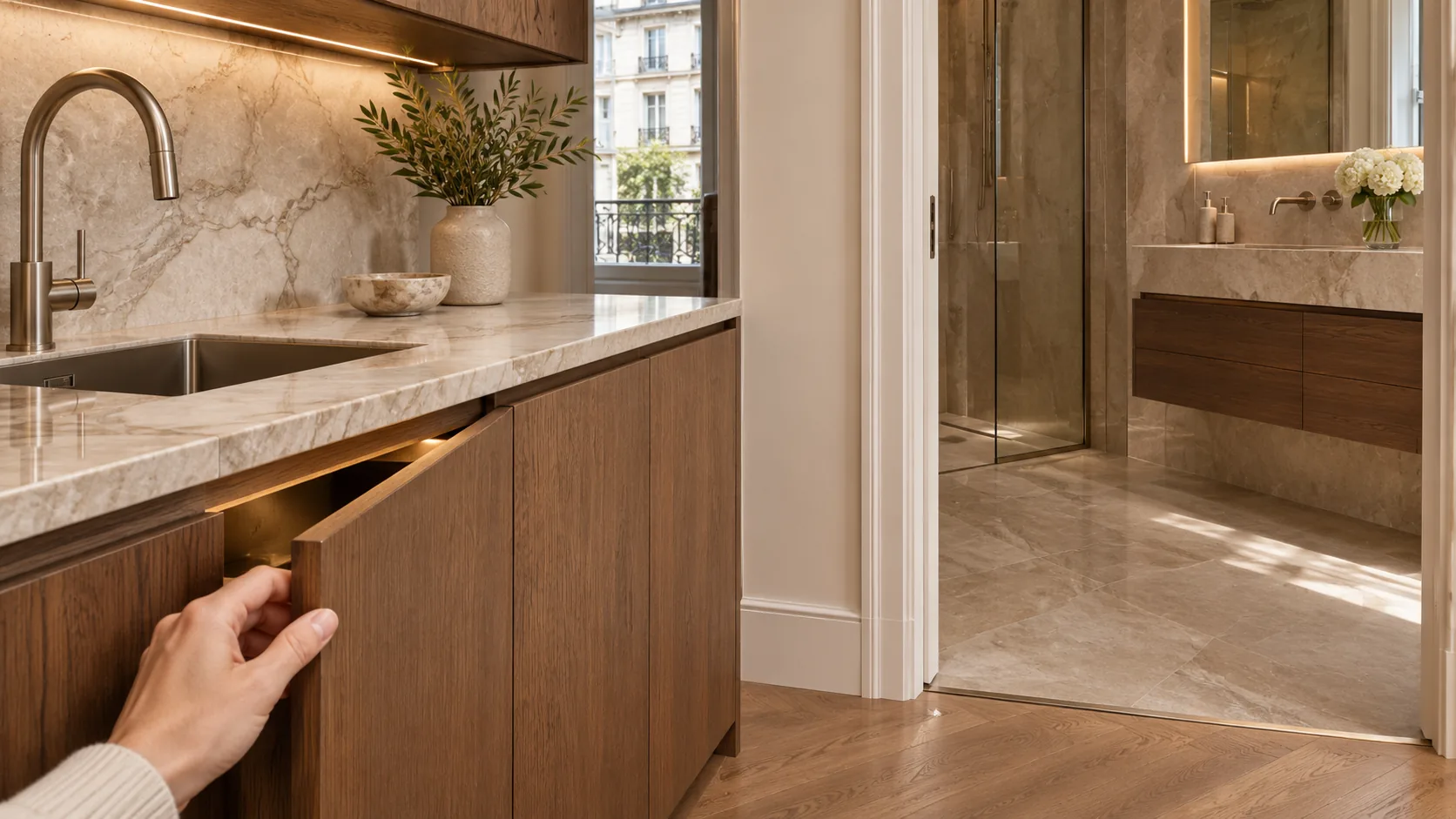
Finishes shape our perception of quality, but they do not reveal the full scope of the work or how it will age.
Ten points to understand before making a decision
◆ 1. What actually changed?
Ask for a clear description of the scope: layout, utilities, windows, heating and cooling, bathrooms, kitchen, floors and joinery. Specific information helps distinguish cosmetic updating from a broader renovation.
◆ 2. Does the current layout match the available documentation?
If rooms were combined, bedrooms created, terraces enclosed or kitchens and bathrooms moved, understand whether the physical property is consistent with the plans and available records.
◆ 3. Which permissions were required?
Depending on the type of work and the municipality, a project may require a licence, responsible declaration, prior notice or other permission. If common elements were affected, the owners’ association may also be relevant. The documentation should be consistent with the stated scope.
◆ 4. Were the installations renewed, or only the visible fittings?
New switches and taps do not in themselves prove that wiring, pipework or internal networks were replaced. Ask what was done, when, and whether supporting documents or warranties remain available.
◆ 5. How does the property perform, not just how does it look?
Ventilation, temperature, noise, daylight, water pressure and drainage shape everyday comfort. A beautifully staged viewing cannot always show how the home behaves at other times or in other seasons.
◆ 6. Are there details that deserve an explanation?
Strong paint smells, recently covered areas, colour differences, irregular joints, condensation or marks near windows and wet areas do not necessarily indicate a defect, but they justify clear questions.
◆ 7. How suitable are the installed solutions?
Quality is not only about brands or expensive materials. Suitability, workmanship, junctions between elements and the ability to maintain or replace components also matter.
◆ 8. How does the apartment relate to the building?
A renovated apartment remains part of a building with a structure, roof, façade, shared pipework, lift and communal systems. The building’s condition and the owners’ association decisions can matter as much as the interior.
◆ 9. Which invoices, warranties or certificates remain available?
Documents can clarify who carried out the work, which equipment was installed and whether warranties may still apply. Missing documents do not prove poor workmanship, but they reduce traceability.
◆ 10. What future cost may sit behind a “turnkey” purchase?
A move-in-ready home may save time, but future maintenance, equipment replacement and excluded work still need to be considered. The price should reflect what is there, not only how it looks.

Consistency between the physical home, its layout and the available documents deserves as much attention as the interior design.
Documents that may provide useful context
The relevant documentation depends on the property, the scope of the work, the municipality and the date of completion. As a starting point, a buyer may ask about:
- A description or specification of the work, with previous and current plans if available.
- The applicable building licence, responsible declaration, prior notice or municipal authorisation.
- Owners’ association consent where common elements were affected.
- Invoices, warranties and details of the professionals or contractors involved.
- Installation or equipment certificates where applicable.
- The energy performance certificate and the property’s general documentation.
The objective is not to collect paperwork indiscriminately. It is to check whether the story told by the property — what was done, when and to what extent — is coherent.
A renovation should add value, not replace questions
A well-conceived renovation can improve comfort, functionality and value. But an impeccable presentation should not reduce the buyer’s diligence. The more persuasive the visual result, the more important it is to distinguish design, workmanship, documentation and the overall condition of the building.
Buying with judgement does not mean looking for faults in every corner. It means understanding what is being purchased and how much of the price reflects a genuine, durable and verifiable improvement.
Author: Lora Galeva · Published: 25 November 2026 · Reviewed: 25 November 2026
If you would like us to guide you through the whole process, discover our buyer’s agent services.
Related articles
- How much does a buyer’s agent cost in Spain? What determines the fee
- The agent showing you a property: are they representing you?
- Property viewing checklist: 25 checks before you buy
- How to tell if a property is fairly priced before making an offer
- How to choose a buyer’s agent: 12 questions before you sign
- Owners’ association minutes: what they may reveal before buying a property
- Reservation, holding deposit and arras: what changes before buying in Spain
| HOW LORA GALEVA HELPS |
| A renovation can increase a property’s value. It should never replace the right questions. |
| Discover our buyer representation approach → |